
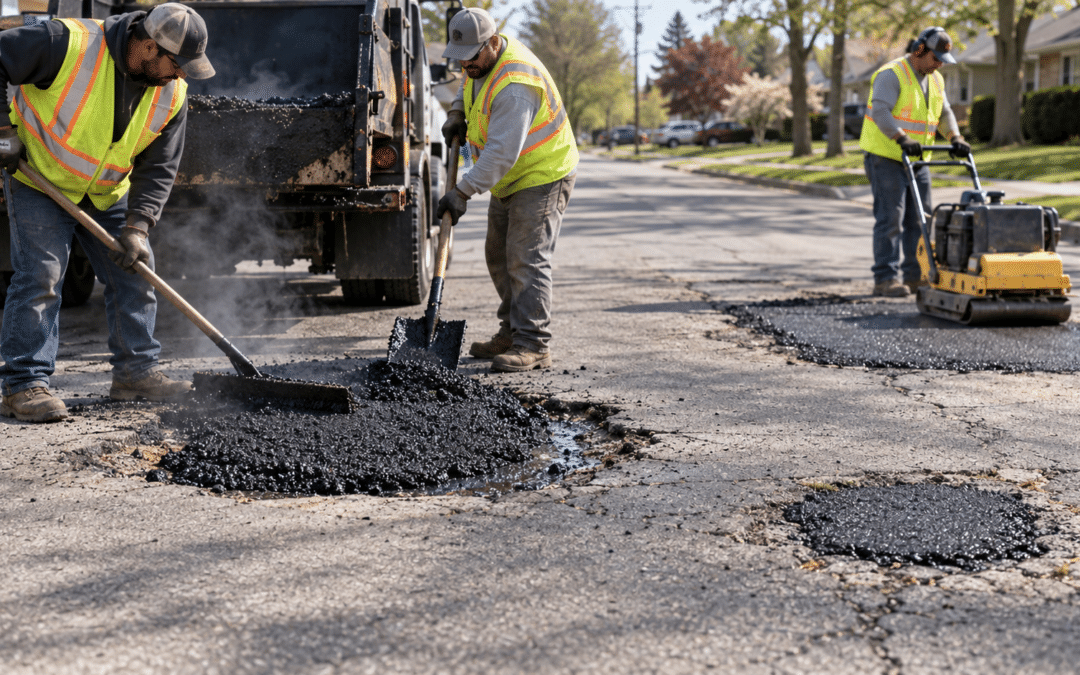
Potholes can turn a relatively smooth driveway, parking lot, or roadway into an uneven surface that is uncomfortable to drive over and vulnerable to further deterioration. However, there is more than one way to address pothole damage, and the right approach can depend on the condition of the pavement, the depth of the failure, weather conditions, traffic levels, and how long the repair needs to last. Understanding the most common pothole repair methods can help property owners make more informed decisions about maintaining their asphalt.
From straightforward cold-patch repairs to specialized spray injection systems and more extensive full-depth patching, each technique serves a different purpose. Learning how to repair asphalt potholes properly starts with understanding the source and severity of the pavement failure rather than simply filling every hole the same way.
Why Choosing the Right Pothole Repair Method Matters
Potholes typically develop when asphalt weakens and breaks apart under a combination of moisture, temperature changes, traffic, and pavement deterioration. Water can enter cracks or damaged areas in the asphalt, weaken the pavement structure, and contribute to progressive surface failure.
Simply covering the visible hole does not necessarily address the surrounding deterioration. A repair method that works well for a relatively shallow pothole may not be appropriate when the underlying pavement or base has failed.
When comparing pothole repair methods, important factors can include:
- The depth and size of the pothole
- Condition of the asphalt surrounding the damaged area
- Amount and type of vehicle traffic
- Current temperature and weather conditions
- Availability of repair materials and equipment
- Whether the repair is intended as a short-term or longer-lasting solution
- Whether deterioration extends beneath the asphalt surface
Professional evaluation can help determine whether a localized patch is appropriate or whether deeper pavement repair is needed.
1. Throw-and-Roll Pothole Repair
How It Works
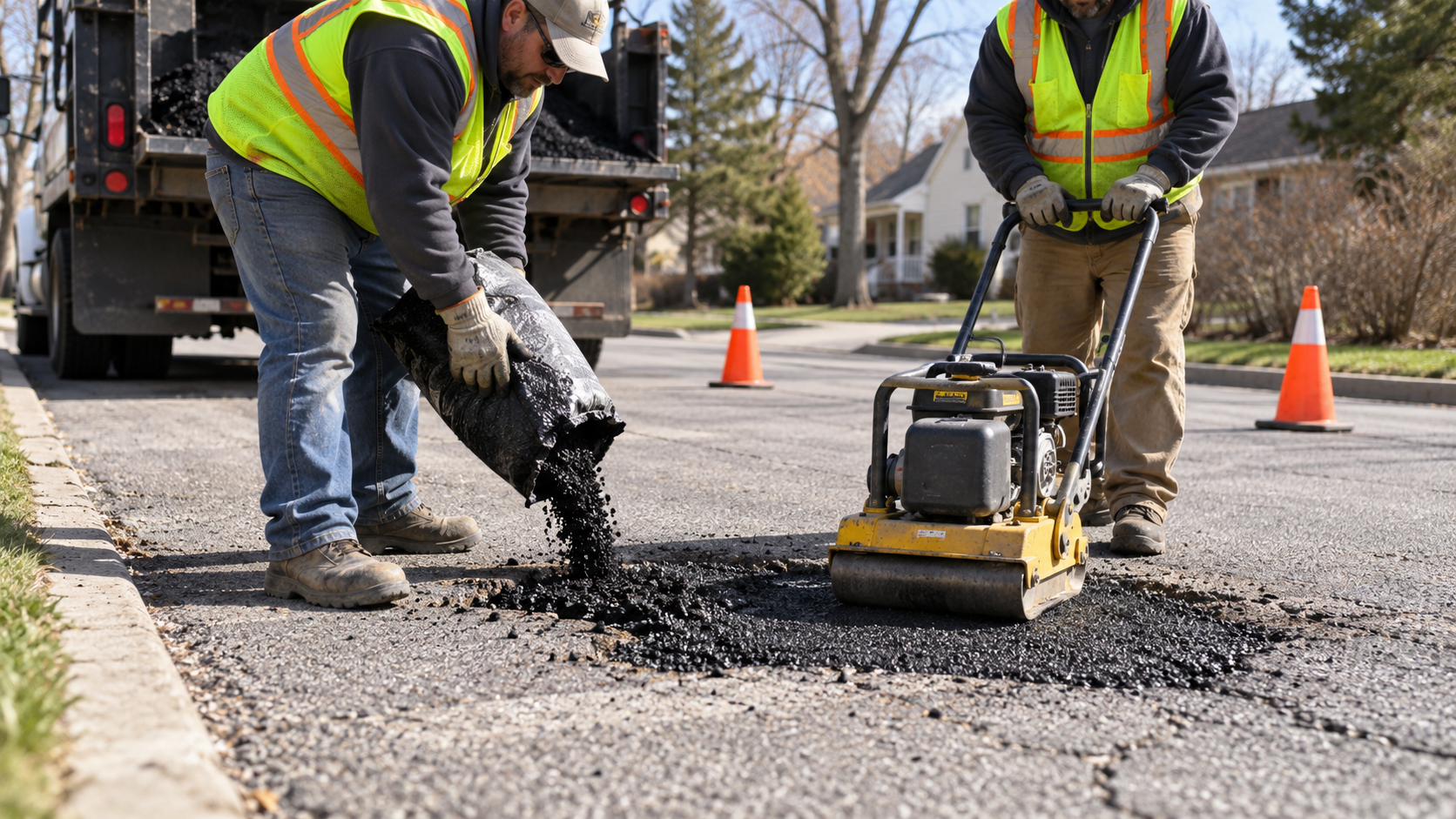
Throw-and-roll is one of the simplest methods used to repair potholes. Loose debris may be removed from the damaged area before asphalt patching material is placed directly into the pothole. The new material is then compacted, often using a roller, plate compactor, truck tire, or other suitable equipment.
Although the process is relatively straightforward, material selection and adequate compaction can have a significant effect on the quality of the finished patch. Federal Highway Administration research has found that throw-and-roll repairs using quality materials can perform comparably to more labor-intensive semi-permanent repairs in many circumstances.
When It May Be Used
Throw-and-roll repair can be useful when potholes need to be addressed efficiently, particularly when fast pavement maintenance is a priority. It can also provide a practical option during conditions that make more extensive pavement preparation difficult.
Common applications may include:
- Small or moderate potholes
- Emergency pavement repairs
- Areas requiring rapid restoration
- Temporary or maintenance-focused patching
- Locations where extensive cutting and excavation are unnecessary
The longevity of the repair depends on factors such as material quality, compaction, traffic, drainage, and the condition of the surrounding asphalt.
2. Semi-Permanent Pothole Repair
How It Works
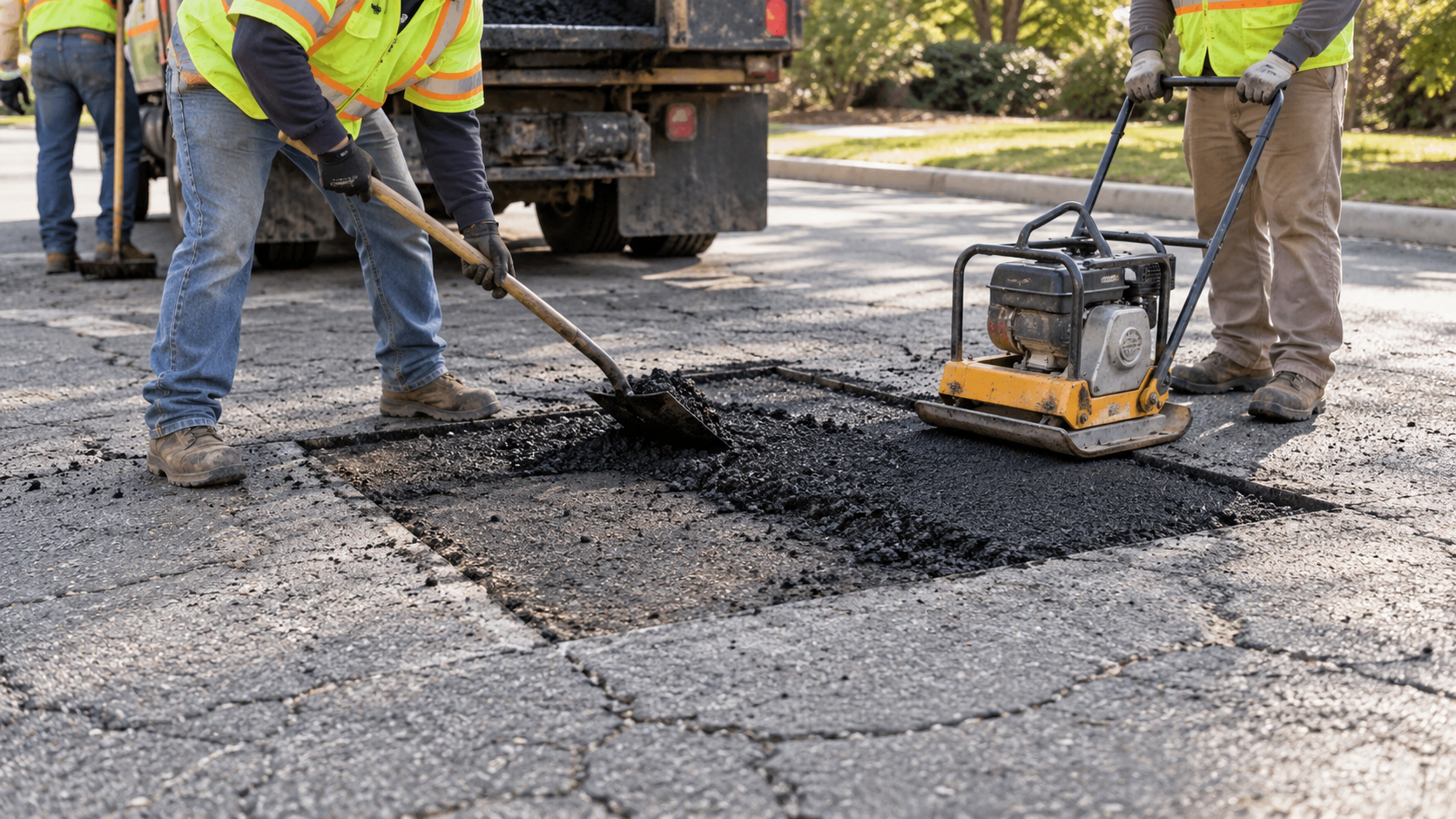
Semi-permanent pothole repair involves more preparation than basic throw-and-roll patching. Loose or deteriorated material is removed, and the edges of the damaged area are typically cut or shaped to create a sound repair area. Patching material is then placed within the prepared section and thoroughly compacted.
This added preparation helps establish better contact between the repair material and stable surrounding pavement. The process generally requires more labor and equipment than simpler patching methods because the damaged area must be cleaned and prepared before new asphalt is installed.
When It May Be Used
Semi-permanent patching can be appropriate where the surrounding edges of a pothole are fractured, loose, or irregular and need to be removed before repairs are completed. It is often considered when additional pavement preparation is justified by the condition of the damaged area.
Common applications may include:
- Potholes surrounded by crumbling asphalt
- Moderately deteriorated pavement sections
- Locations requiring more extensive preparation
- High-use pavement where patch stability is important
- Repairs where unstable material needs to be removed first
The method can create a well-defined patch, but the additional cutting, cleaning, and compaction generally make it more labor-intensive than several other repair options.
3. Spray Injection Pothole Repair
How It Works
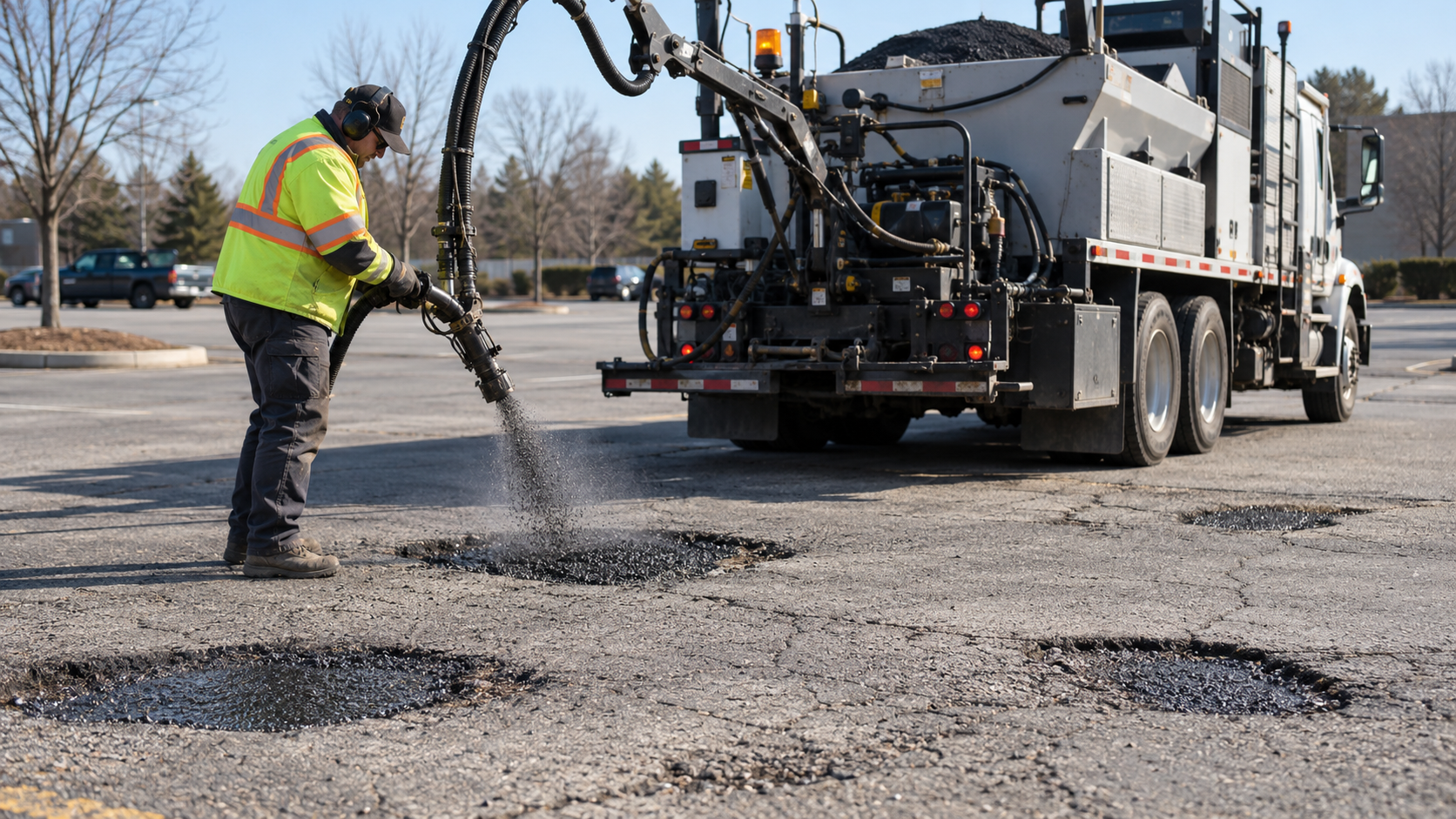
Spray injection pothole repair uses specialized equipment to place aggregate and asphalt emulsion into damaged pavement. The process typically clears loose material from the repair area before applying the repair mixture under pressure. The aggregate and emulsion combine to fill the void and create a compact repair without relying on the same level of cutting and manual placement required by traditional patching.
Spray injection can allow potholes to be repaired efficiently across larger pavement areas. FHWA research has identified spray injection as a high-productivity repair technique and found that properly performed spray-injection repairs compared well with other patching methods in field testing.
When It May Be Used
Spray injection is particularly useful when multiple potholes need attention or when an efficient repair process is important. Because specialized equipment delivers the repair materials directly into the damaged area, crews can address multiple problem areas without extensive excavation at every location.
Common applications may include:
- Parking lots with multiple potholes
- Private roads and larger paved areas
- Commercial properties
- Residential asphalt surfaces
- Areas requiring efficient localized repairs
MacDonald Contracting uses spray injection pothole repair as one of its asphalt repair options in Montana, using gravel and asphalt emulsion to restore damaged pavement and improve the usability of the surface.
4. Hot Mix Asphalt Pothole Repair
How It Works
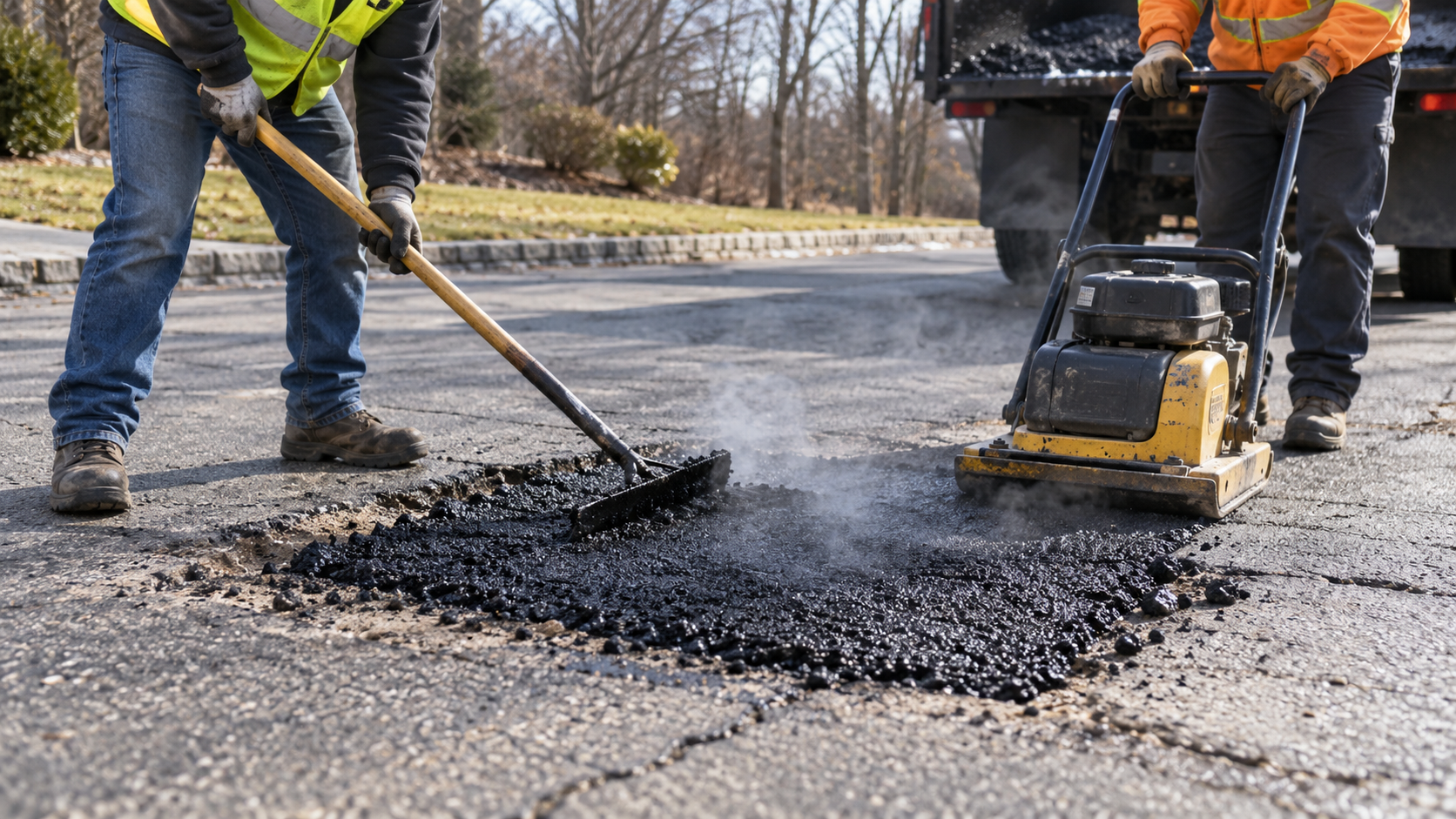
Hot mix asphalt repair uses heated asphalt material similar to the material commonly used during asphalt paving. The damaged area is cleaned and prepared, after which hot mix asphalt is placed into the repair area and mechanically compacted to create a dense patch.
Depending on the condition of the pothole, deteriorated asphalt may need to be removed before the new material is installed. Proper preparation, placement, and compaction are especially important because the repair needs to integrate with the existing pavement while providing adequate support under vehicle loads.
When It May Be Used
Hot mix asphalt is often used when conditions allow a more substantial patch and suitable hot asphalt material is available. It can be particularly useful for areas that experience regular vehicle traffic and where the goal is to create a durable localized repair.
Common applications may include:
- Moderate or larger potholes
- Commercial parking lots
- Driveways with localized pavement failure
- Heavily traveled pavement
- Repairs completed during suitable paving conditions
Hot mix repairs can provide a durable solution, but the final performance still depends on the condition of the base beneath the pothole and the quality of the surrounding pavement.
5. Full-Depth Asphalt Patching
How It Works
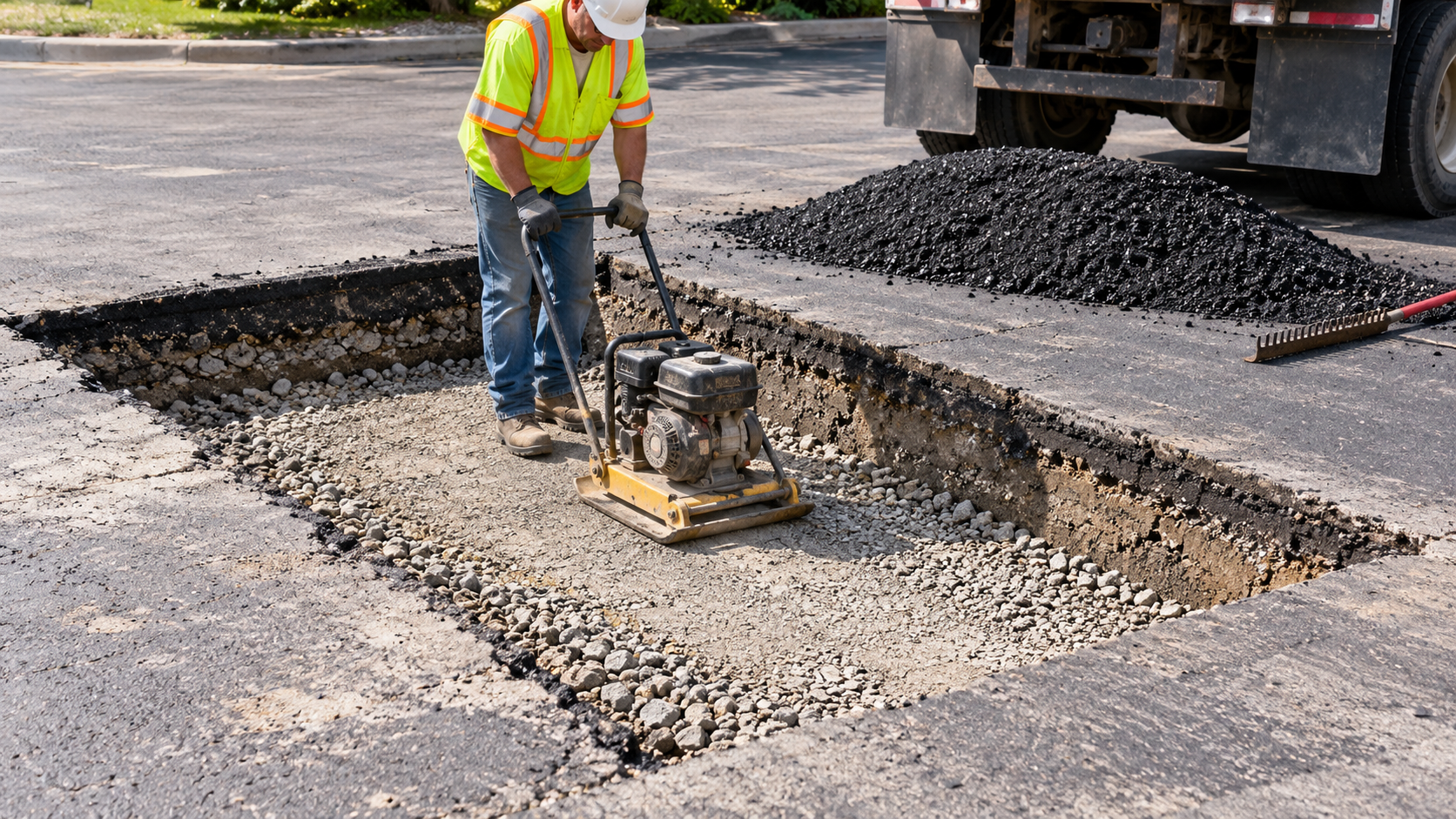
Full-depth patching goes beyond repairing only the visible asphalt surface. The deteriorated pavement is cut out and removed through the full asphalt depth, and unstable underlying material may also be excavated when necessary. The base is then repaired or stabilized before new asphalt is installed and compacted.
Because this approach addresses damage beneath the surface, it is one of the more extensive pothole repair methods. MacDonald Contracting identifies full-depth patching as an option for deeper asphalt failures where a more durable repair is required.
When It May Be Used
Full-depth patching can be appropriate when potholes are symptoms of deeper structural deterioration rather than isolated surface damage. Repeated failure in the same location can sometimes indicate that the pavement underneath the patch is no longer providing sufficient support.
Common applications may include:
- Deep potholes
- Failed pavement foundations
- Soft or unstable areas
- Repeated potholes in the same location
- Sections with significant cracking and deterioration
Because more pavement must be removed and reconstructed, full-depth repair requires greater preparation than localized surface patching but can address problems that simpler repairs cannot.
6. Infrared Asphalt Repair
How It Works
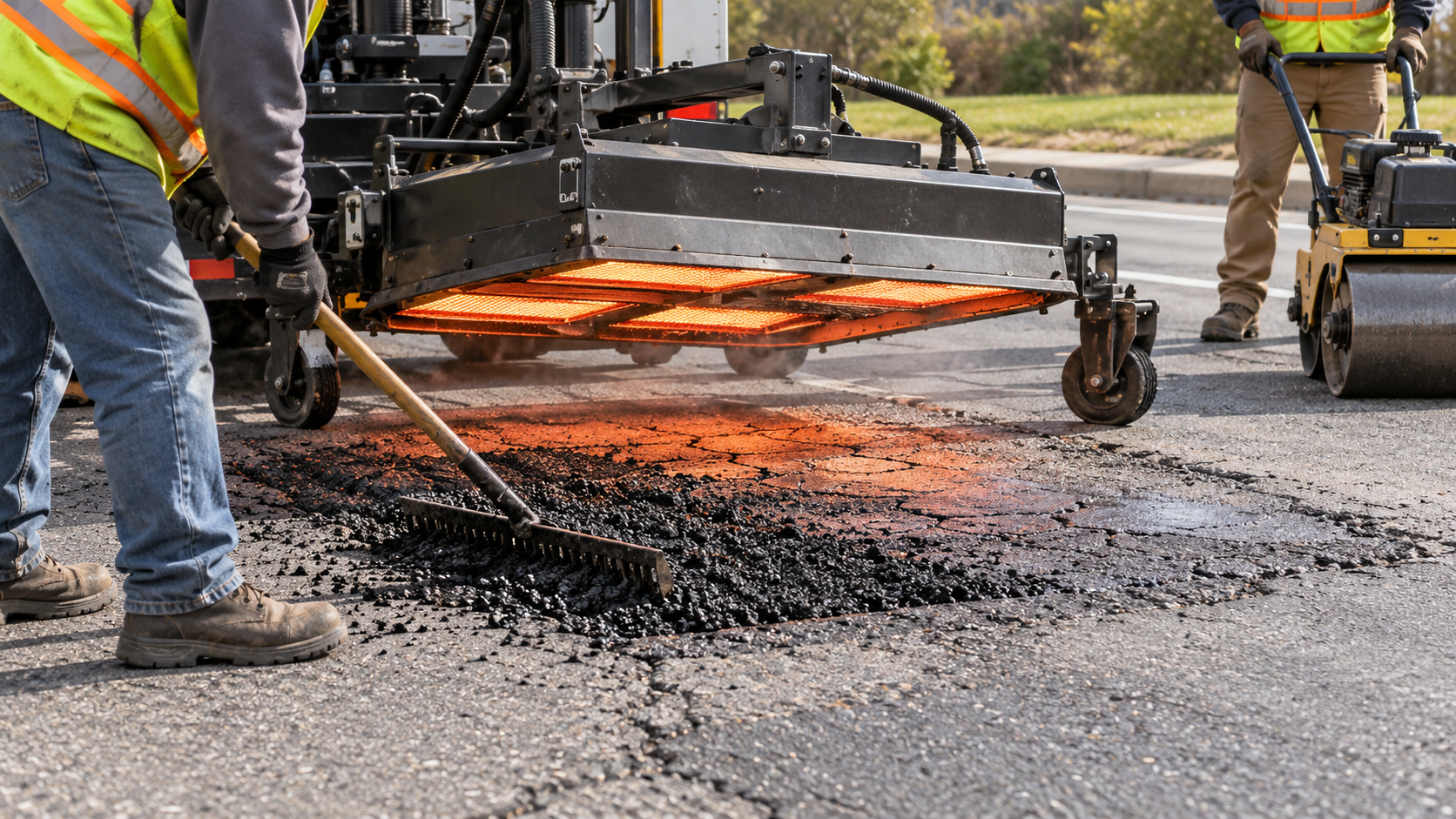
Infrared asphalt repair uses specialized heating equipment to warm and soften the existing asphalt surrounding a damaged area. The heated material can then be worked together with additional asphalt, reshaped, leveled, and compacted to restore the pavement surface.
Heating the surrounding asphalt makes it possible to blend existing and new material rather than creating a completely cold joint around the patch. MacDonald Contracting includes infrared asphalt repair among its corrective asphalt maintenance options for damaged pavement.
When It May Be Used
Infrared repair can work well for certain localized surface defects where the existing pavement remains suitable for reheating and reworking. It is not necessarily appropriate when extensive base failure exists beneath the asphalt because heating the surface alone cannot rebuild an unstable foundation.
Common applications may include:
- Shallow potholes
- Surface deterioration
- Depressed asphalt areas
- Failed patches
- Localized pavement imperfections
The condition and depth of the damaged asphalt should be evaluated first to determine whether infrared repair or a deeper patching method is more appropriate.
Comparing Common Pothole Repair Methods
Each method approaches pavement damage differently. Understanding the general differences can make it easier to determine which solution deserves consideration.
| Pothole Repair Method | General Process | Common Application |
| Throw-and-Roll | Patch material is placed and compacted | Fast repairs and localized potholes |
| Semi-Permanent Repair | Damaged edges are prepared before patching and compaction | Potholes with deteriorated surrounding pavement |
| Spray Injection | Aggregate and asphalt emulsion are applied using specialized equipment | Multiple potholes and efficient large-area maintenance |
| Hot Mix Asphalt Repair | Heated asphalt is placed and mechanically compacted | Durable localized repairs |
| Full-Depth Patching | Failed asphalt and potentially unstable base material are removed and rebuilt | Deep or structural pavement failures |
| Infrared Repair | Existing asphalt is heated, reworked, supplemented, and compacted | Shallow or localized surface damage |
There is no single method that is appropriate for every pothole. A small isolated defect and a deep failure caused by deteriorated base material require very different approaches.
Should Every Pothole Be Repaired the Same Way?
No. One of the most important lessons when comparing pothole repair methods is that pavement conditions should dictate the repair strategy.
A shallow pothole with sound pavement underneath may need only a localized patch. A large pothole with unstable pavement beneath it could require full-depth removal and reconstruction. Properties with numerous potholes may also benefit from a high-productivity method such as spray injection rather than treating each damaged area with a labor-intensive reconstruction process.
Season, temperature, traffic demands, drainage, pavement age, and budget can also influence the most practical repair approach.
Professional Pothole Repair Services From MacDonald Contracting
MacDonald Contracting provides professional asphalt repair and maintenance services for residential and commercial properties throughout Montana. Our team works on driveways, parking lots, driveways, private roads, and other paved surfaces, helping property owners address existing pavement damage while protecting asphalt that remains in serviceable condition. Our asphalt services include preventative and corrective maintenance options such as sealcoating, hot rubber crack filling, surface patching, full-depth patching, infrared repair, pothole repair, and striping.
Our pothole repair services are designed to restore damaged asphalt and create smoother, safer driving surfaces. In particular, we offer spray injection pothole repair, which uses gravel and asphalt emulsion to efficiently fill damaged pavement areas. Whether you are dealing with potholes in a residential driveway or multiple problem areas throughout a commercial property, our team can evaluate the pavement and recommend an appropriate repair approach.
Find the Right Pothole Repair Method for Your Montana Property
Choosing between different pothole repair methods starts with understanding the depth, location, and underlying cause of the pavement damage. While some potholes can be addressed efficiently with localized patching or spray injection, deeper pavement failures may require more extensive preparation or full-depth repair.
MacDonald Contracting can help evaluate damaged asphalt and determine an appropriate repair strategy for your residential or commercial property. Contact MacDonald Contracting today to request a free estimate for professional pothole repair and asphalt maintenance services in Montana.
FAQs
What are the most common pothole repair methods?
Common pothole repair methods include throw-and-roll patching, semi-permanent patching, spray injection repair, hot mix asphalt repair, infrared repair, and full-depth patching. The best option depends on the size and depth of the pothole, surrounding pavement condition, traffic levels, and whether the damage extends into the base.
Are all potholes repaired the same way?
No, potholes can vary significantly in size, depth, and underlying cause. A professional asphalt contractor can inspect the damaged area and select a repair method based on the actual condition of the pavement.
How long does a pothole repair last?
The lifespan of a pothole repair depends on the repair method, material quality, pavement condition, traffic levels, weather, drainage, and installation quality. Repairs placed over a stable base and properly compacted generally have a better chance of lasting longer.
Should potholes be repaired before sealcoating?
Yes, significant potholes and structural defects should generally be repaired before sealcoating. Sealcoating is designed to protect existing asphalt surfaces, not fill deep holes or correct failed pavement.