
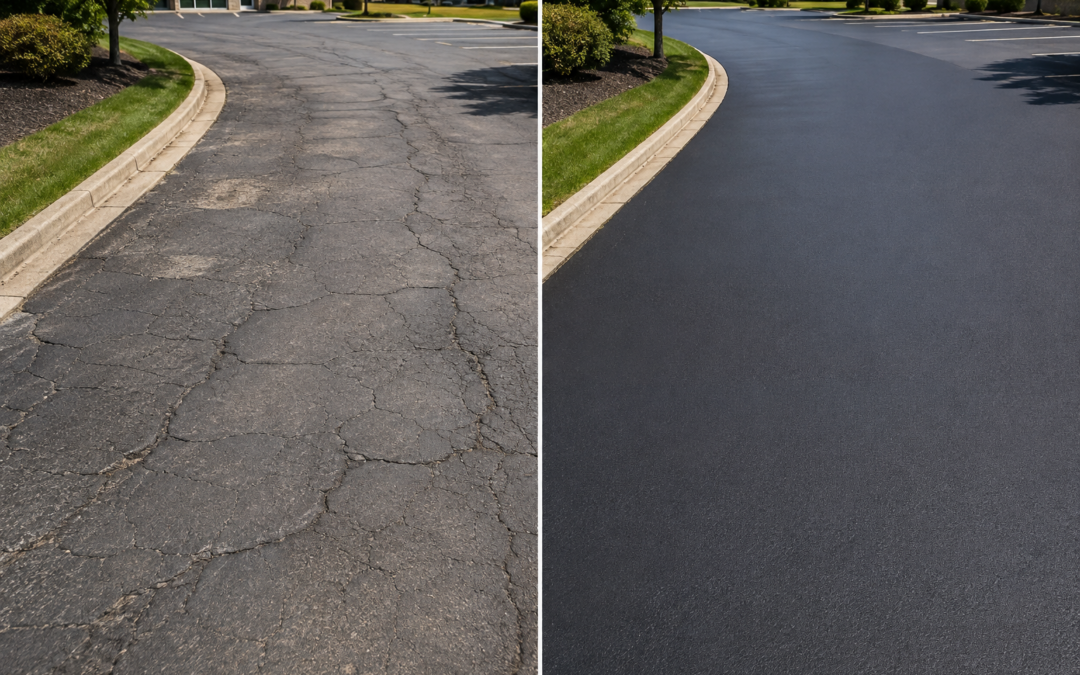
Worn, cracked, or faded asphalt can make an otherwise well-maintained property look neglected. More importantly, small pavement problems can grow into potholes, unstable sections, drainage concerns, and more expensive repairs when they are left untreated.
Seeing an asphalt repair before and after comparison is one of the best ways to understand what professional pavement care can accomplish. A damaged surface may initially appear beyond saving, but the right combination of repair, routine maintenance, crack filling, sealcoating, and striping can produce a dramatic transformation.
Below, we explore examples of asphalt repair, maintenance, and sealcoating work completed by the MacDonald Contracting team. These transformations show how professional asphalt services can improve residential driveways, commercial parking lots, private roads, access lanes, and other paved surfaces.
Asphalt Driveway Repair Before and After: Repairing a Damaged Residential Surface
Residential driveways regularly endure vehicle weight, temperature changes, moisture, sunlight, and winter weather. Over time, these conditions can cause cracks to widen and weakened areas to break apart.
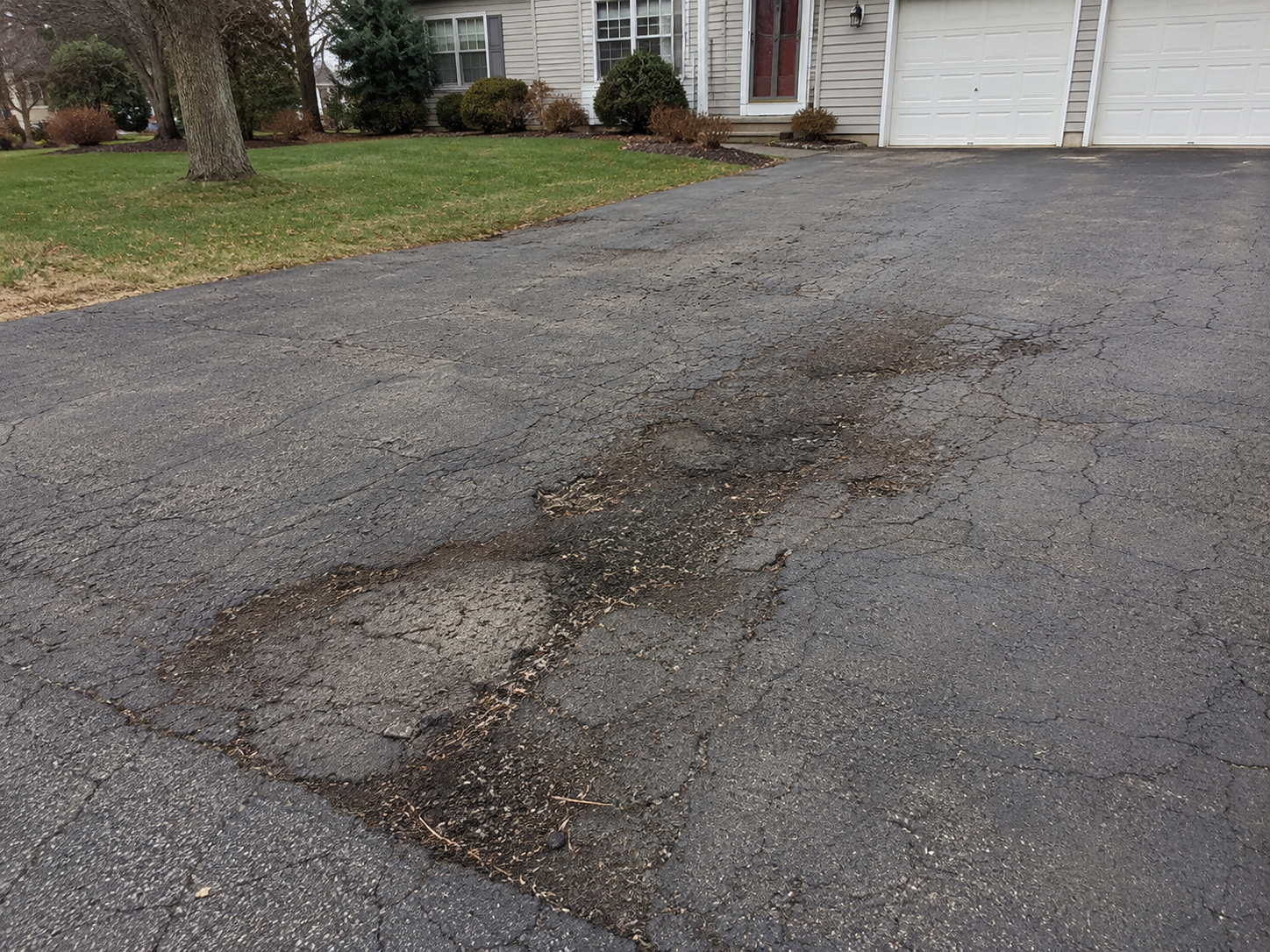
In this asphalt driveway repair before and after example, the driveway had visible cracking and a deteriorated section that created an uneven appearance. The damaged area also provided an opening for water to enter the pavement. If left unresolved, moisture and freeze-thaw cycles could have contributed to additional deterioration.
Before the Driveway Repair
Before work began, the driveway showed several common signs of asphalt damage:
- Open cracks across the surface
- Loose or crumbling pavement around a weakened area
- An uneven section that collected dirt and moisture
- A worn appearance that reduced curb appeal
- Damage that could continue expanding into the surrounding asphalt
The Repair Process
Our team evaluated the damaged area to determine the most practical repair approach. The project involved preparing the affected pavement, removing loose material where necessary, and repairing the failed section with durable asphalt repair materials.
Visible cracks were also addressed to reduce water intrusion and help prevent the damage from spreading. Careful preparation was essential because a repair performs best when the affected area is clean and the new material can properly bond with the surrounding pavement.
After the Driveway Repair
After the work was completed, the most visibly damaged section had been restored. The driveway had a cleaner and more consistent appearance, while the repaired area provided a more stable driving surface.
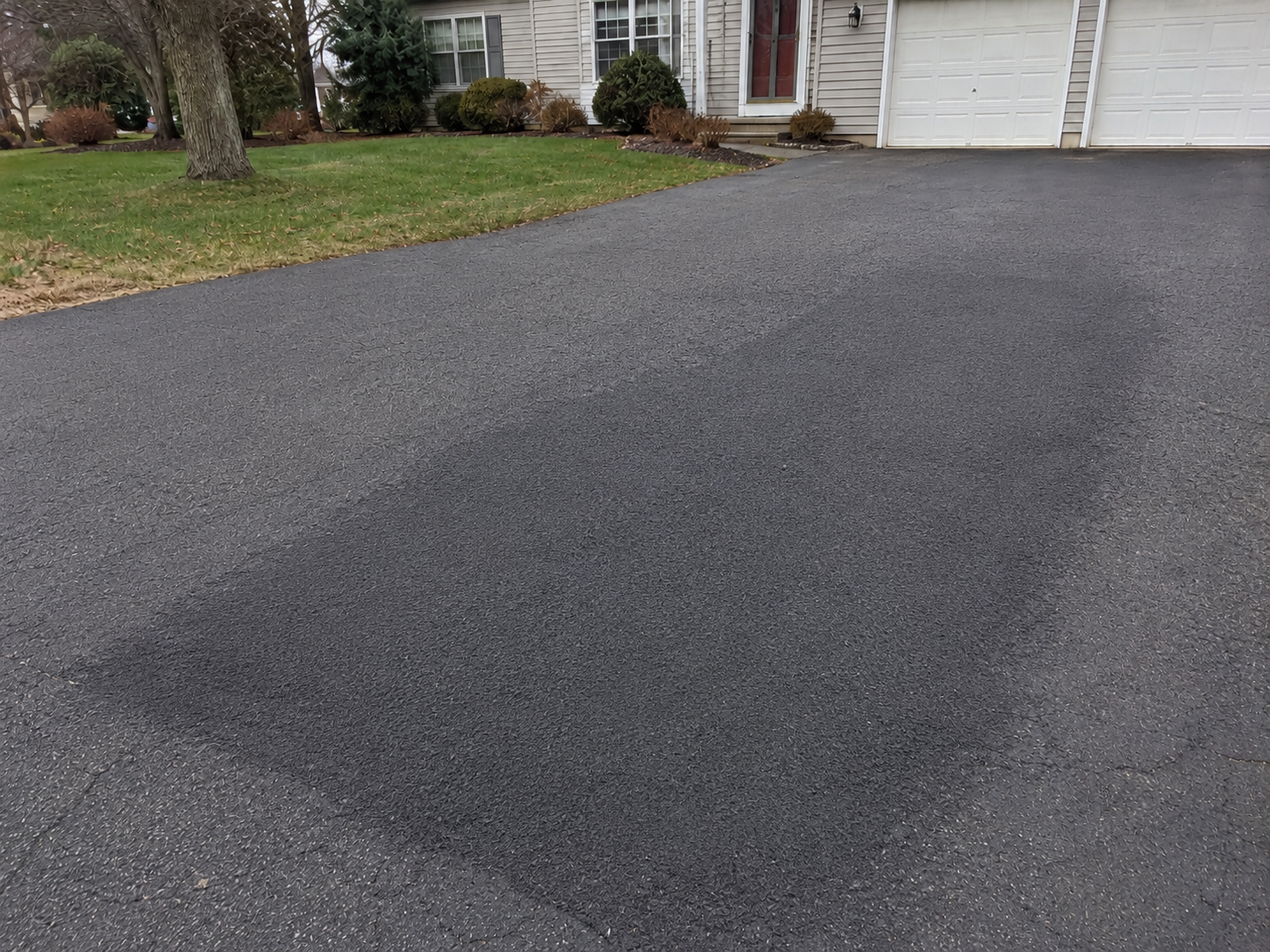
The completed repair provided several improvements:
- A smoother and more stable surface
- Fewer openings where water could penetrate the pavement
- A cleaner transition between the repaired area and existing asphalt
- Improved driveway appearance and curb appeal
- Reduced risk of the damaged section continuing to break apart
This type of asphalt driveway repair before and after transformation illustrates why it is beneficial to address pavement damage before a small problem affects a larger section of the driveway.
Parking Lot Before and After: Crack Filling and Asphalt Maintenance
Commercial parking lots experience different challenges than most residential driveways. Daily traffic, turning vehicles, parked cars, snow removal equipment, oil, water, and deicing products can all contribute to surface wear.
In this parking lot maintenance example, the asphalt remained serviceable, but numerous cracks had developed throughout the paved area. The lot needed preventive attention before those cracks widened or contributed to potholes and more extensive pavement failure.
Before Parking Lot Maintenance
The parking lot had visible cracks running through several driving and parking areas. Some pavement markings had also faded, making the property look older and less organized.
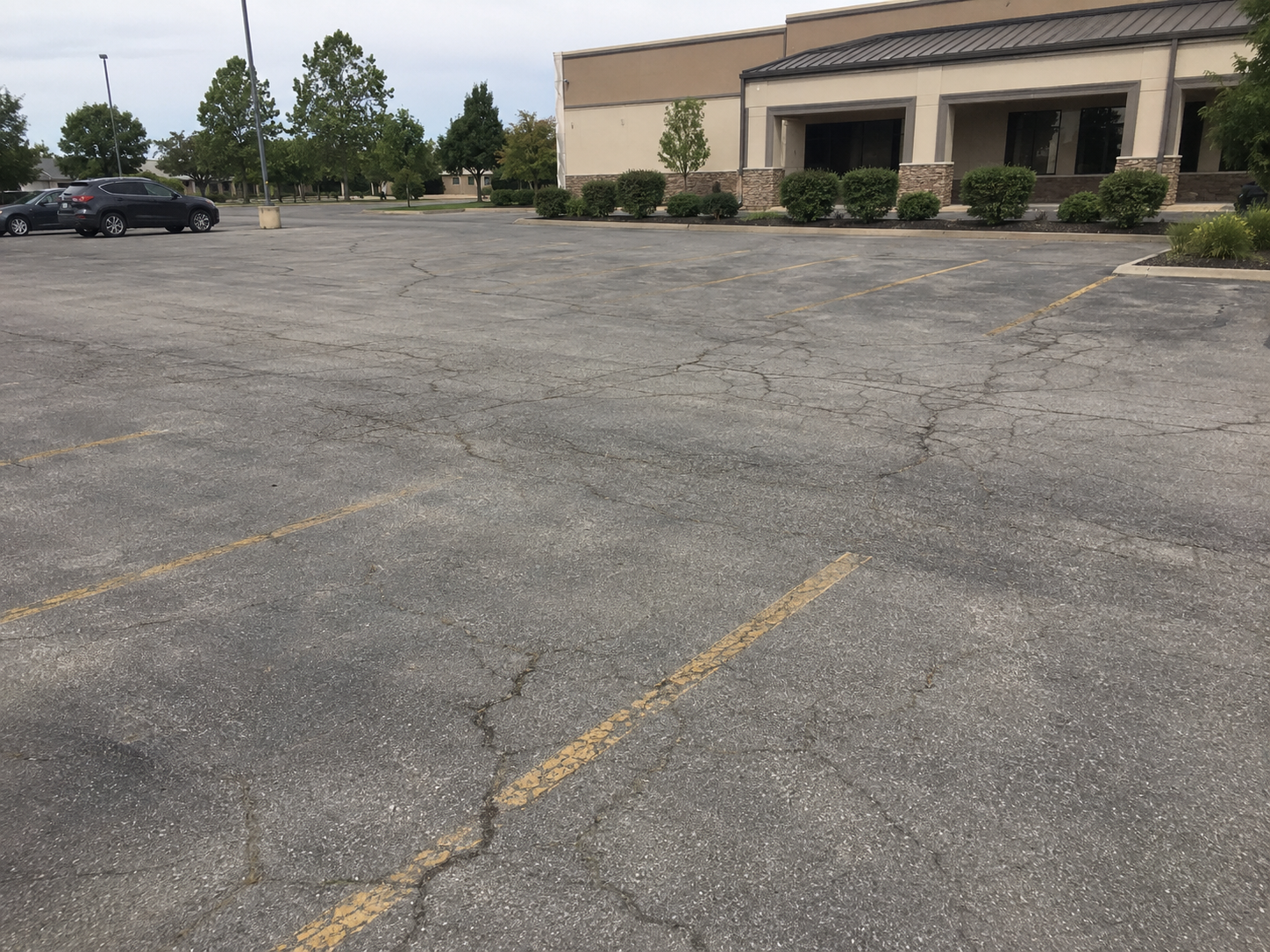
Conditions before maintenance included:
- Multiple open cracks in high-traffic areas
- Early surface wear and fading
- Opportunities for water to enter the pavement
- Faded parking lines
- A less polished first impression for customers and visitors
The Asphalt Maintenance Process
Our team prepared the surface and cleaned the cracks so they could be treated effectively. Hot rubber crack filling was then used to seal appropriate openings and help limit water penetration.
Crack filling is an important maintenance service because pavement cracks rarely correct themselves. Once water enters an opening, changing temperatures can place additional stress on the surrounding asphalt. Treating cracks at the right time can help slow that progression and extend the useful life of the pavement.
After the asphalt maintenance work was completed, the parking layout could also be refreshed with professional striping where needed.
After Parking Lot Maintenance
The treated cracks were sealed, and the paved area had a cleaner, more maintained appearance. Refreshed parking lines improved the organization of the lot and made parking spaces easier to identify.
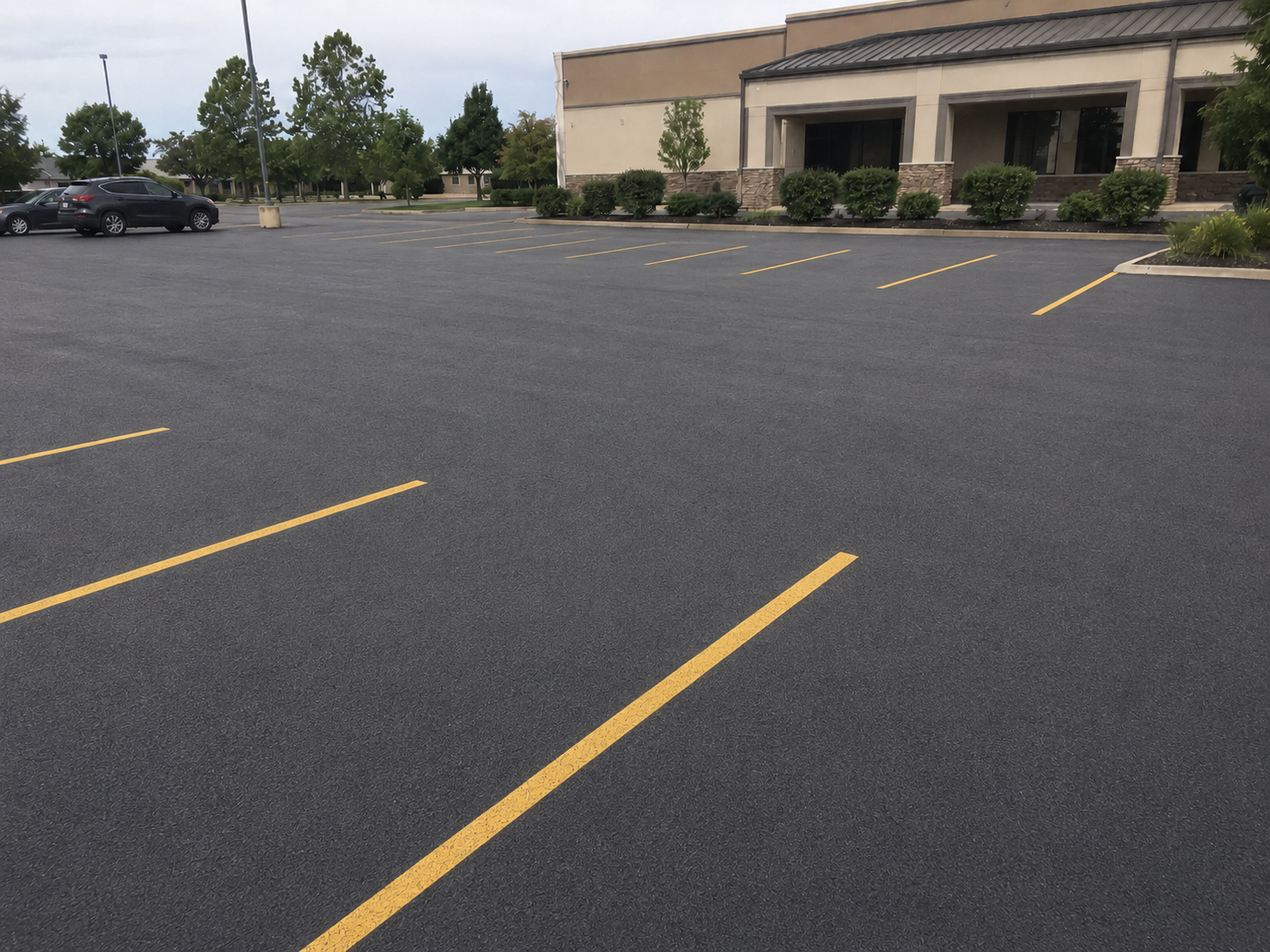
The completed work helped:
- Reduce water entry through treated cracks
- Slow the progression of existing pavement damage
- Improve the overall appearance of the property
- Make parking spaces and traffic patterns easier to follow
- Support a safer, more orderly environment for drivers and pedestrians
- Prepare the lot for continued use and future maintenance
This example demonstrates that a meaningful asphalt repair before and after result does not always require replacing an entire parking lot. Timely maintenance can address vulnerable areas while preserving pavement that is still structurally serviceable.
Asphalt Road Before and After: Pothole Repair and Surface Restoration
Private roads, shared access lanes, ranch roads, and commercial entrances often carry regular vehicle traffic while receiving less routine attention than driveways or parking lots. When a weak area develops, repeated traffic and water exposure can quickly turn it into a pothole.
For this road repair example, the pavement had a deteriorated section within the normal vehicle path. Loose material and an uneven depression made the area uncomfortable to drive over and allowed water to collect.
Before the Road Repair
The damaged road section showed:
- A visible pothole or failed pavement area
- Loose asphalt around the edges
- An uneven driving surface
- Water and debris collecting in the depression
- Damage positioned directly in the path of vehicle traffic
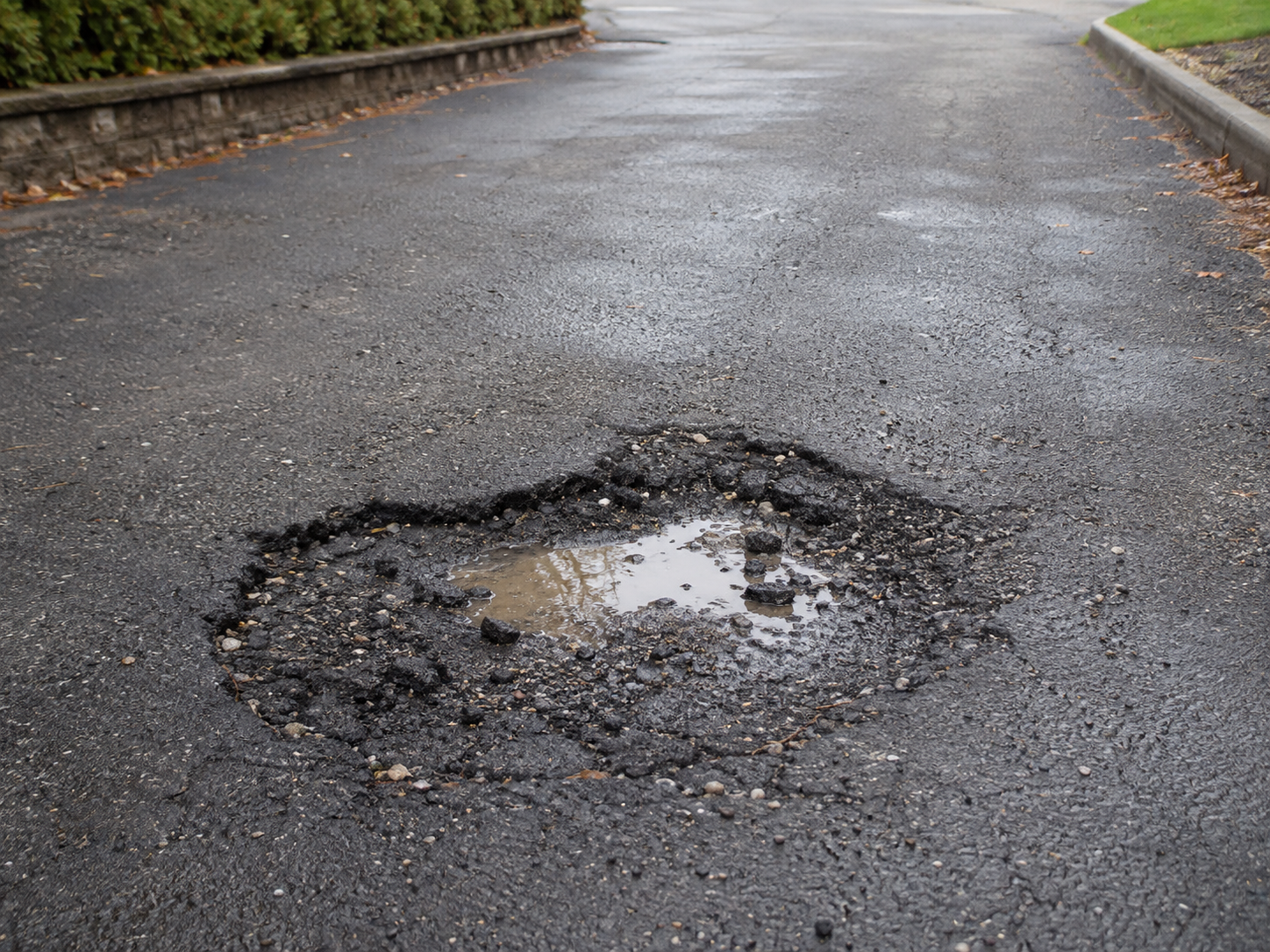
The Pothole Repair Process
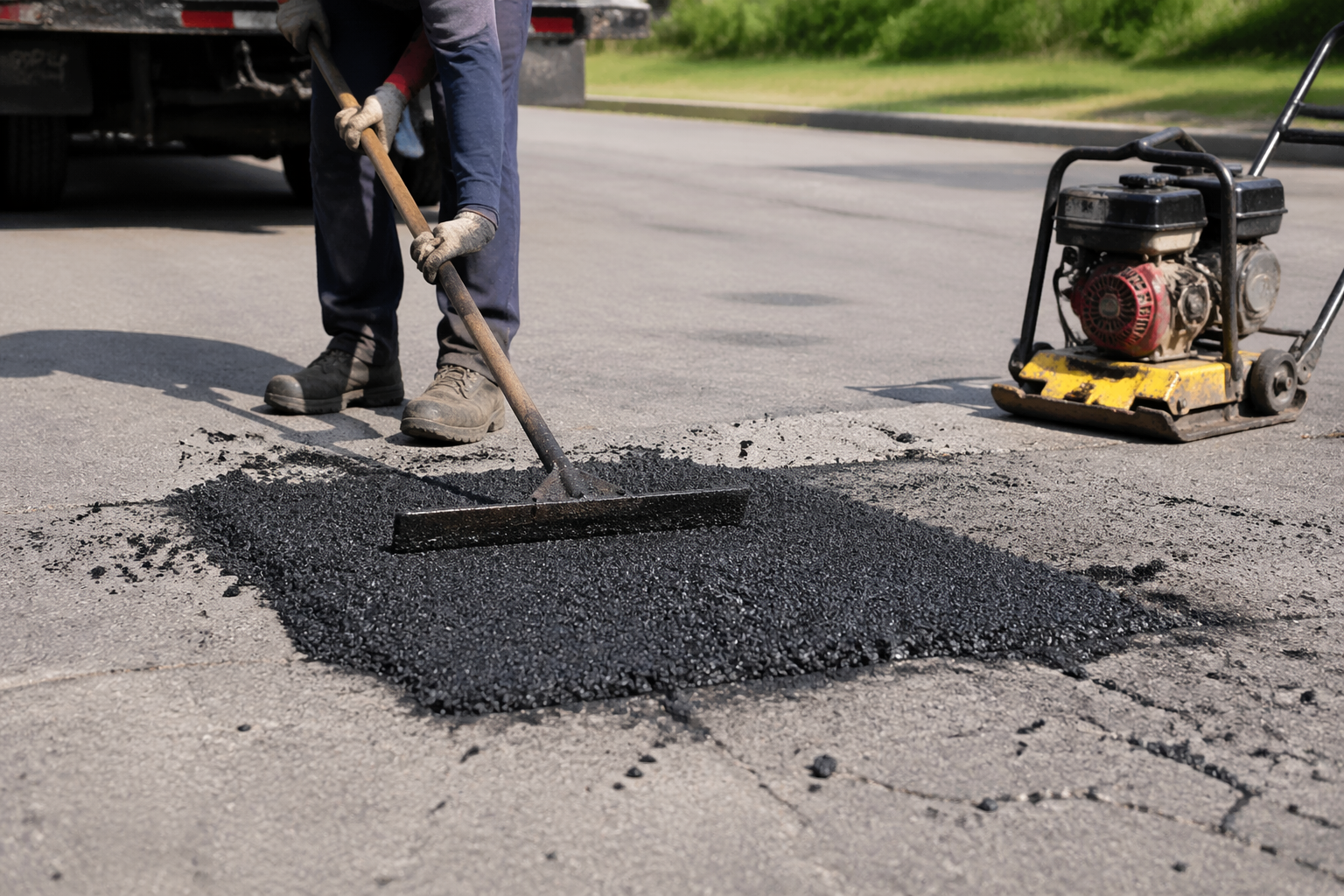
Our team prepared the damaged area by clearing away loose material and creating a suitable surface for the repair. The pothole was then filled and compacted to restore the failed section and create a more dependable driving surface.
Proper preparation and compaction are critical parts of pothole repair. Simply placing material into an unprepared depression may provide only a temporary cosmetic improvement. A professional repair focuses on creating a stable patch that can better withstand traffic and changing weather conditions.
After the Road Repair
Once completed, the pothole had been filled and the surface was more level with the surrounding pavement. Drivers could travel through the area more comfortably, and the repaired section no longer collected debris in the same way.
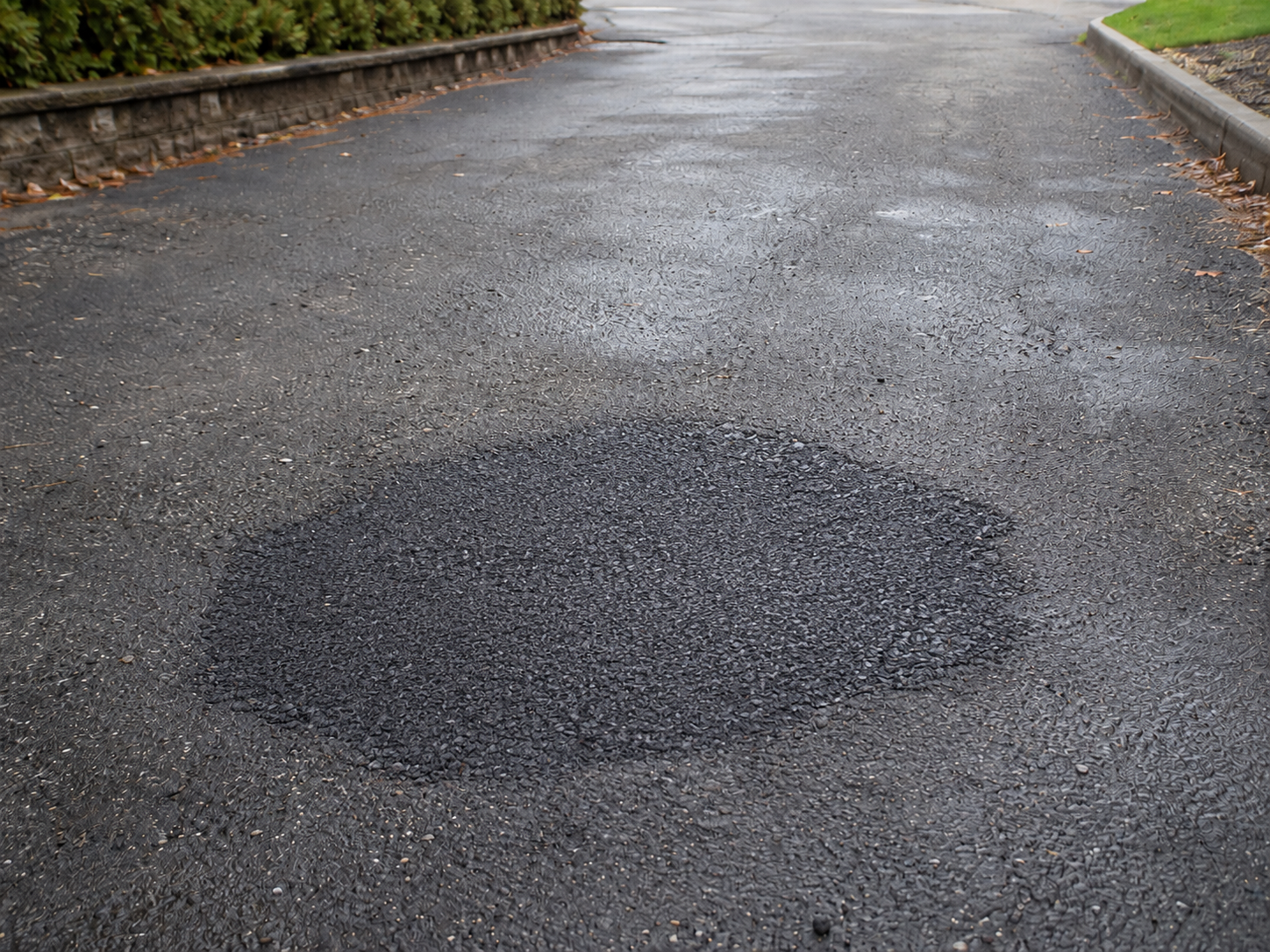
The transformation resulted in:
- A smoother path for vehicles
- Removal of loose and crumbling material
- Improved appearance
- Less opportunity for water to collect in the damaged area
- A more stable surface in a frequently traveled location
Asphalt Sealcoating Before and After: Refreshing and Protecting a Faded Surface
Not every worn asphalt surface requires structural repair. When pavement is still in generally sound condition but has become faded, dry, or weathered, sealcoating may be an effective maintenance option.
Sealcoating creates a protective barrier over the asphalt. It also restores the darker, more uniform finish that many property owners associate with newer pavement.
Before Sealcoating
In this example, the asphalt had lost much of its original dark color. The surface looked gray and weathered, with minor wear visible throughout the paved area.
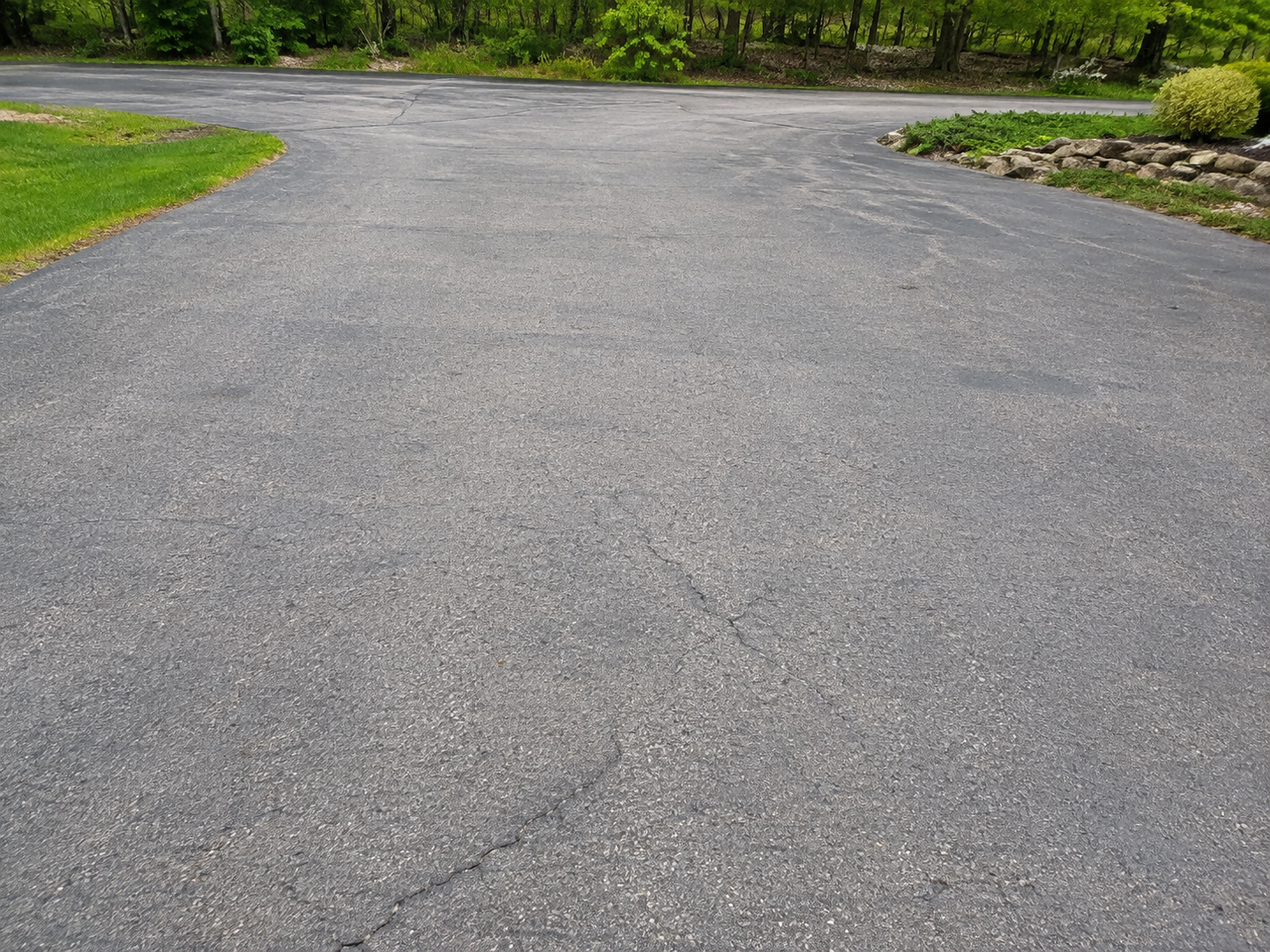
Before sealcoating, the pavement showed:
- A faded gray color
- Dry or weathered surface areas
- Reduced curb appeal
- Minor surface imperfections
- Signs of exposure to moisture, sunlight, and regular traffic
The Sealcoating Process
The surface was cleaned and prepared before sealer was applied. Preparation may include removing dirt and debris, treating appropriate cracks, and protecting nearby surfaces from overspray or unwanted application.
MacDonald Contracting uses durable hot oil-based sealer to help protect asphalt from moisture, oxidation, ultraviolet exposure, chemicals, and everyday wear. Sealcoating works best as preventive maintenance on asphalt that has not already experienced severe structural failure.
After Sealcoating
The finished pavement had a darker, cleaner, and more consistent appearance. The newly sealed surface improved the overall presentation of the property while adding a protective layer over the existing asphalt.
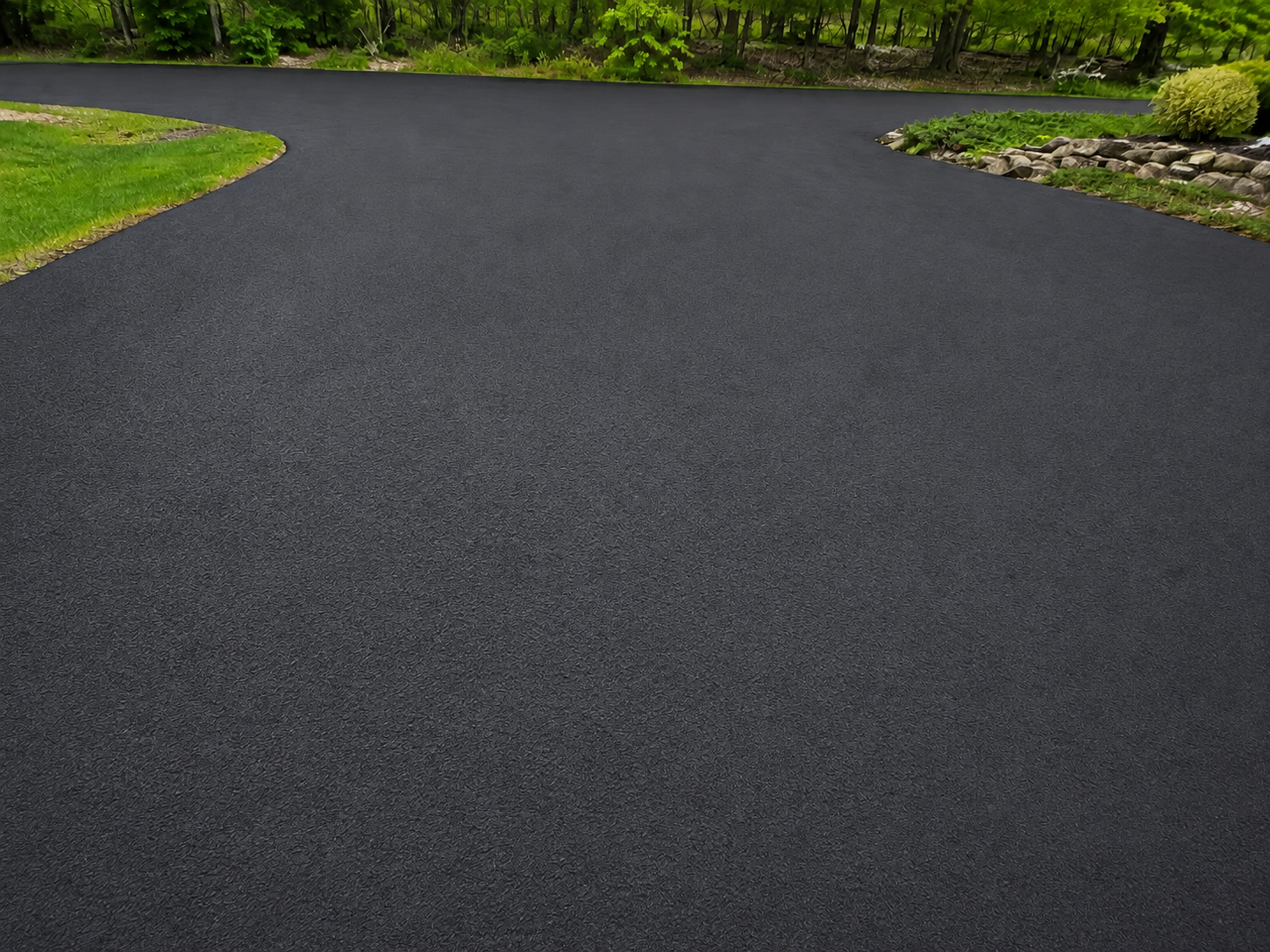
Benefits visible in the finished project included:
- A darker and more uniform surface
- Improved curb appeal
- A cleaner, well-maintained appearance
- Added protection against common environmental exposure
- A refreshed backdrop for new or updated pavement striping
For parking lots, restriping after sealcoating can make the transformation even more noticeable. Bright, clearly defined markings stand out against the dark surface and help establish parking spaces, traffic directions, access areas, and pedestrian zones.
Repair, Maintenance, or Sealcoating: Which Service Does Your Asphalt Need?
The right service depends on the condition of the pavement. Although an on-site evaluation provides the clearest answer, the following guidelines can help property owners understand their options.
Asphalt Repair May Be Appropriate When:
- Potholes have formed
- Sections of pavement are crumbling or breaking apart
- The asphalt has become uneven
- Damage is concentrated in specific areas
- Cracks have progressed into more serious pavement failure
Asphalt Maintenance May Be Appropriate When:
- Cracks are present but the surrounding pavement remains stable
- The surface needs preventive attention
- Parking lot markings have faded
- Early wear is visible in high-traffic areas
- The property owner wants to address problems before they become more extensive
Sealcoating May Be Appropriate When:
- The asphalt has faded from black to gray
- The surface is weathered but still in serviceable condition
- The pavement needs additional protection from moisture and sunlight
- The property owner wants to improve curb appeal
- A parking lot needs a refreshed surface before restriping
Sealcoating is not designed to conceal major structural damage. Potholes, failed sections, and significant cracks should be repaired before a protective coating is applied.
Professional Residential and Commercial Asphalt Services from MacDonald Contracting
MacDonald Contracting provides professional asphalt services for homeowners, businesses, property managers, and commercial facilities in Butte, Montana, and surrounding communities. Our team brings experience, careful preparation, durable materials, and attention to detail to every project. Whether we are improving a residential driveway or maintaining a busy commercial parking lot, we focus on practical solutions that support pavement performance and long-term property value.
Our asphalt repair services include Asphalt Maintenance & Seal Coating, Hot Rubber Crack Filling & Pothole Repair, and Parking Lot & Driveway Striping. We can help address isolated damage, protect serviceable pavement, improve curb appeal, and create clearer, more organized parking and driving areas.
Request a Free Asphalt Estimate from MacDonald Contracting
The difference between damaged pavement and a professionally maintained surface can be substantial. These asphalt repair before and after examples show how targeted repairs, preventive maintenance, sealcoating, and striping can improve the appearance, usability, and longevity of driveways, parking lots, roads, and other paved areas.
Do not wait for a small crack, worn section, or pothole to become a larger problem. Contact MacDonald Contracting today to discuss your residential or commercial asphalt needs and request a free estimate. Our team will evaluate your pavement, explain the available options, and recommend an appropriate solution for your property.
FAQs
Why does newly repaired asphalt look darker than the surrounding pavement?
New asphalt and repair materials usually appear darker because the existing pavement has faded from age, sunlight, and weather exposure. The contrast often becomes less noticeable as the repaired area naturally weathers over time.
Will the repaired area look exactly like the original asphalt?
A repair may not perfectly match the color or texture of older pavement, especially immediately after the work is completed. The main goal is to restore stability and function while creating the cleanest, most consistent finish possible.
Can old asphalt look new again after maintenance?
Maintenance can substantially improve the appearance of serviceable asphalt, especially when crack filling, sealcoating, and striping are combined. However, severely deteriorated pavement may still require more extensive repairs or replacement.
Why might a repaired area look slightly raised or uneven in a photo?
Some repairs may initially have minor texture or elevation differences compared with older pavement. These differences can become less noticeable with use, but significant unevenness should be evaluated by the contractor.